Green Paradox
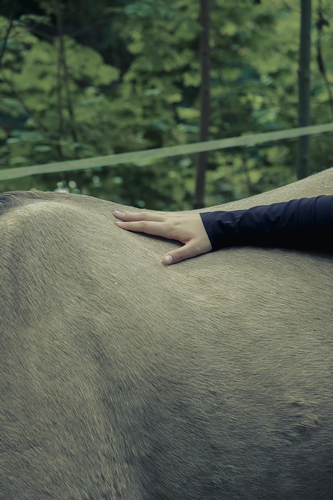
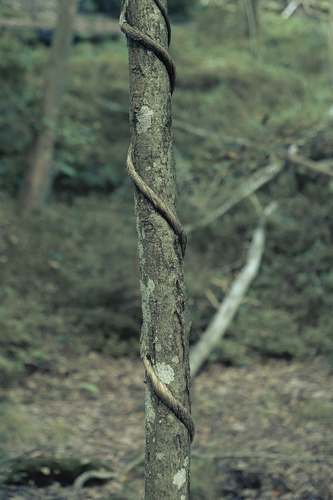
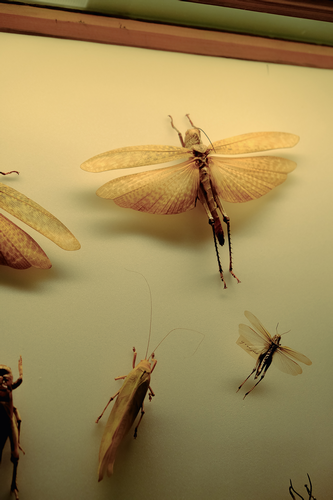
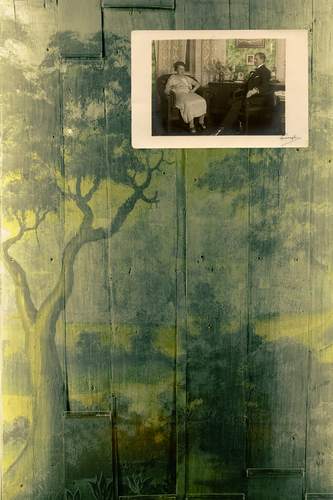
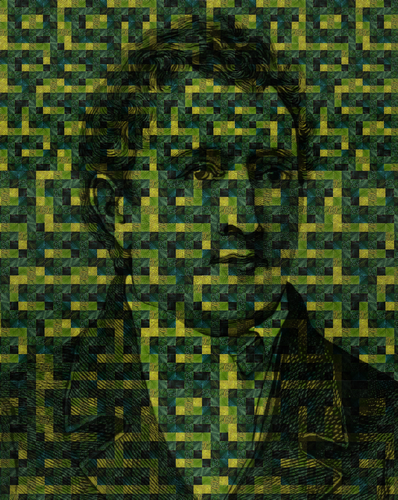
The Green Paradox project was born during the Swit artist residency in Gothenburg in September 2025 and develops around the figure of Scheele Green, an 18th-century pigment of extraordinary brilliance but intrinsically toxic nature. Discovered by chemist Carl Wilhelm Scheele at the ancient pharmacy Apoteket Enhörningen (the “Unicorn Pharmacy”), this color becomes the fulcrum of a visual investigation that explores the paradox between aesthetic beauty and invisible danger.
The work is configured as a chromatic archaeology in which archival images and contemporary photographs intertwine to trace a subtle line between the history of science, myth, and the transformation of matter.
The essential counterpart of this research is the city of Gothenburg, voted “Europe’s greenest city”: an urban lung where nature expresses a living and regenerating breath, placing itself in dialectical antithesis to the mineral toxicity of the historic pigment.
Through an act of photographic listening, the work deconstructs the legacy of a color that still questions our present. The result is a complex chorus where chemistry meets ecology and memory becomes image, transforming the history of a
color into a poetic reflection on the fragility of the balance between humanity and the environment. Scheele’s Green thus becomes the lens through which to observe nature’s capacity to persist and change, between aesthetic appeal and contemporary awareness.
Project in the frame of Giovane Fotografia Italiana #13 – VOCI / VOICES
BIO
Alice Jankovic

Alice Jankovic (b. Genoa, IT, 1996) is a visual artist and photographer whose work explores the complex relationship between humans and nature.
After attending art school, it was the northern light she discovered during a year in Sweden that marked the beginning of her visual exploration. Her academic career, which began at the Academies of Fine Arts in Venice and Genoa, was consolidated in Milan with a two-year specialization at the Italian Institute of Photography (IIF) and furthered with a course in Photography and Literature at the Jack London School in the Marche region.
Her work evolves into a form of “visual archaeology” that integrates digital and analog photography
and archival materials. Influenced by myth and storytelling, Alice deconstructs the image to recontextualize it in installations and editorial projects, transforming the shot into a tool for investigating memory. Through a dialogue between past and present, her works question the human imprint on the landscape, oscillating between documentation and evocation.